




Hey, it’s Marc & the 51 team
I’ve watched plenty of turf wars in this market. Never one like this.
Minnesota just made running a prediction market a felony. Punishable by five years in prison.
The same week, CFTC filed its proposed rule to govern prediction markets with the White House on Tuesday, and the same afternoon Donald Trump posted that the agency’s “exclusive authority over Prediction Markets” must be defended. Now, the Office of Management and Budget is reviewing the proposal.
All of this is happening a week after Minnesota became the first state to ban prediction markets outright (SF4760, effective August 1), with the CFTC suing within 24 hours to block enforcement. Meanwhile former CFTC and SEC Chair Gary Gensler told CNBC the agency may not even have authority under Dodd-Frank to regulate prediction markets, predicting the issue will ultimately be decided by the Supreme Court. [Read more on prediction markets]
Here’s what else moved this week:
DTCC picked Stellar for tokenising securities
SoFi launches its first stablecoin
Coinbase added six new currencies to its institutional product
Bitwise just undercut 21Shares by 165 bps
Mastercard just cleared NYDFS
VanEck’s $61M treasury token got a DeFi lending venue
And 15+ more signals. Let’s jump in 👇🌆
🚨 SAVE YOUR SPOT: We’re running two live panels next week with BCG on what banks and asset managers should actually be doing about digital assets.
Webinar 1: June 5, 10am EST, with Nadine Chakar (DTCC), Christian Schmid + Roy Choudhury (BCG). Inside the DTCC’s $100T tokenization buildout that goes live in October.
Webinar 2: June 8, 12:30pm CET, with Kim Hochfeld (State Street), Christian Schmid + Roy Choudhury (BCG). What live tokenization actually looks like, from the team that just shipped SWEEP, a tokenized private liquidity fund.
30 min each, 10 min live Q&A.
Top Boardroom Reads
Project Agorá: A shared programmable platform for wholesale cross-border payments (BIS)
Stablecoin issuance is overrated, with Tony McLaughlin, Founder at Ubyx (51)
Beyond stablecoins: The emerging architecture of on-chain money (McKinsey)
Global Banking Annual Review 2026 (McKinsey)
Top Signals This Week
DTCC picked Stellar for tokenising securities
On May 27, 2026, DTCC announced that it will integrate DTC’s tokenization service with the Stellar network, with the initial scope covering Russell 1000 equities, major index ETFs, and U.S. Treasuries. The integration supports the full asset lifecycle, including corporate actions and reporting, rather than a wrapper or representation. Tokenized assets retain the same investor protections, entitlements, and safeguards as traditionally held securities. [RELEASE]
Why it matters: The chain selection is a signal. Stellar offers compliance-first protocol, native token primitives, and predictably lower operating costs. And, it is the only public blockchain that has run an SEC-registered tokenized money market fund (BENJI) continuously for five years. WisdomTree and Amundi are also running their funds on Stellar. It is not avoiding Ethereum or EVM compatibility as the DTCC AppChain is built on Hyperledger Besu. Hyperledger Besu is handling settlement infrastructure. The DTCC’s AppChain is not issuing assets, it is moving them, matching them, and settling them between institutions. While, for tokenizing which includes asset creation, Stellar’s native token primitives do this cleanly, without smart contract risk and without unpredictable costs. Surprising for us that DTCC didn’t select Canton for this, given their partnership.

🚨 The Friday newsletter only scratches the surface. A lot more is going on that we’ll tell you in our PRO briefings.
SoFi becomes the first bank to offer a stablecoin on a public blockchain
On May 27, 2026, SoFi Technologies (NASDAQ: SOFI) made SoFiUSD available to retail members directly inside the SoFi app on Ethereum and Solana. The token is 1:1 redeemable for U.S. dollars from SoFi Bank, backed by liquid reserves on the bank’s balance sheet, and audited by an independent U.S.-licensed CPA. SoFi originally issued SoFiUSD in December 2025 to enterprise partners. Today’s announcement is the consumer rollout. [RELEASE]
Why it matters: Under the GENIUS Act, permitted payment stablecoin issuers cannot pay holders any form of interest or yield. Tokenized deposits sit outside that prohibition and qualify for FDIC insurance. Only a chartered bank can issue them and SoFi has the charter. In this process, SoFiUSD reserves remain at SoFi Bank. Also, SoFi has 14.7M banked customers and now it has become the first bank to offer a stablecoin on a public blockchain. The acquisition cost on each is zero.

Coinbase added six new currencies to its institutional product
Coinbase announced on 26 May that Standard Chartered will provide multi-currency banking rails for Coinbase Prime and Coinbase Exchange institutional clients. The integration adds new direct rails in Australian dollars, Singapore dollars, Canadian dollars and Swiss francs. Euros and pounds settle through G-SIB-backed infrastructure, Standard Chartered itself is a global systemically important bank designated by the Financial Stability Board. [RELEASE]
Why it matters: Coinbase’s Q1 2026 earnings showed institutional revenue of $136M, down 27% sequentially, with institutional trading volumes off 48% QoQ. The volume is drifting to competitors. Binance, Hidden Road, Kraken Prime and FalconX have spent two years building multi-jurisdictional prime brokerage with native multi-currency funding. A Tokyo hedge fund running BTC basis no longer has to convert JPY to USD to fund a Coinbase Prime account if it can use Hidden Road or Binance institutional in local currency. The Standard Chartered rails close that operational gap, retaining the users and capturing SEA markets.
Bitwise just undercut 21Shares by 165 bps
Bitwise Europe GmbH listed the Bitwise Canton ETP (BWCC) on Xetra today (ISIN: DE000A4ARTH9). The product tracks the Kaiko CANTO Reference Rate LDNLF index and holds CC tokens 1:1 in cold storage. Annual management fee is 0.85%. The ETP is BaFin-approved and domiciled in Germany, putting it inside the same regulatory wrapper as Bitwise’s BTCE, BTC1, and DA20 lineup.
Why it matters: Unlike traditional crypto networks, participants can keep transaction data private on Canton while still interacting with counterparties across the network. That combination of privacy and interoperability has become Canton’s key differentiator. Unlike Ethereum (fully transparent, front-running risk) or JPMorgan’s Kinexys (private but closed, no rival bank will trust JPMorgan’s rails), Canton uses configurable sub-transaction privacy. DTCC tokenized U.S. Treasuries on Canton, running a pilot with 26 participants across 21 nodes. Tradeweb and BNY Mellon scaled Canton to $10B/day in repo. HSBC completed a pilot simulating the issuance, transfer, and atomic settlement of its Tokenised Deposit Service (TDS) on Canton. HKEX’s Synapse platform facilitates post-trade workflows for cross-border Northbound Stock Connect trades on Digital Asset’s DAML smart contract language. These aren’t experiments. They’re attempts to rebuild the plumbing of capital markets.

🚨 Want more intelligence and understand what this means for your institution? Subscribe to PRO below:
Mastercard just cleared NYDFS
NYDFS approved Mastercard Transaction Services (U.S.) LLC for a virtual currency business license under New York’s BitLicense framework on 27 May 2026. The license authorizes the unit to conduct virtual currency business activity in New York, including custody, transmission, exchange, and issuance. [RELEASE]
Why it matters: The BitLicense is the keystone, because in U.S. payments, regulatory legibility is the moat. The federal GENIUS Act implementation rules are due by 18 July 2026, less than two months from this license. NYDFS approval is the most likely template federal regulators will recognize as fit-for-purpose. Mastercard acquired BVNK, partnered with SoFi to integrate SoFiUSD (SoFi’s dollar-backed stablecoin) as a settlement currency across Mastercard’s global payments network and its MTN is connected to JPMorgan’s Kinexys. Hence, they are pushing multiple startegies to connect different ledgers in the blockchain space.
Related reads:

VanEck’s $61M treasury token got a DeFi lending venue
Securitize, the SEC-registered tokenization platform issuing VBILL ($61M total value), launched the fund live on a KPK-curated Euler vault on Thursday, May 28. Users can post VBILL as collateral, borrow other crypto assets, and run DeFi strategies while continuing to earn the underlying Treasury yield. The integration runs on Securitize’s DS Protocol, a compliance-aware framework that enforces transfer restrictions and investor eligibility checks onchain. Pricing data is supplied through RedStone oracles. VBILL launched in May 2025 across Avalanche, BNB Chain, Ethereum, and Solana with Wormhole bridging cross-chain liquidity. It charges a 0.20% management fee.
Why it matters: Securitize is not building a fund, it is building a distribution layer. VBILL is the demo unit that proves regulated tokenized treasuries can multi-home across Aave and Euler without a vendor-lock decision. Apollo (ACRED), Hamilton Lane (SCOPE), KKR, and BNY all run on the same rails.
Related reads:

Other Signals
Infrastructure and Markets
Paxos Securities Settlement Company (PSSC) received formal clearing agency registration from the U.S. Securities and Exchange Commission. Link
Samsung Securities, Samsung Card, and Samsung SDS are acquiring a combined 4% stake in Dunamu from Kakao for $407.7M. Link
Aave Labs’ UK subsidiaries, Push Labs Ltd. and Push Virtual Assets Ltd., secured FCA registration as cryptoasset exchange providers. Link
CME Group is extending trading for its regulated cryptocurrency futures and options to 24 hours a day, seven days a week, starting May 29. Link
Regulation and Policy
On January 19 at Davos, Premier David Burt announced that Bermuda would become the first nation to put its entire economy onchain, with Circle providing the digital dollar plumbing, Coinbase wiring the onboarding rails, and Stellar issuing a sovereign-grade Bermuda Digital Dollar. Link
The French Financial Markets Authority (AMF) issued a June 30 deadline for unlicensed crypto companies to secure MiCA permits or exit the market. Link
Hong Kong’s FSTB and SFC finalized consultation conclusions to regulate digital asset advisory and discretionary management services. Link
Banking and Payments
United Texas Bank secured OCC approval to convert to a nationally-chartered bank, gaining direct Federal Reserve access. Link
Banca Sella became the first Italian bank authorized by the Bank of Italy to offer cryptocurrency services under the EU’s MiCA regulation. Link
Block’s Cash App is rolling out a USDC stablecoin payment feature to its nearly 60M users, starting with 25% of the base and reaching full deployment by the end of the week. Link
Nium has partnered with Circle to integrate its global payout infrastructure directly into the Circle Payments Network (CPN). Link
Phantom launched its own USD-pegged stablecoin, CASH, utilizing Bridge’s Open Issuance platform and Stripe’s infrastructure. Link
Funds, Deals and others
VanEck launched VBNB, the first U.S. spot BNB ETF, on the Nasdaq exchange. Link
Grayscale filed an amended S-1 to launch the ‘Grayscale Hyperliquid Staking ETF’ under the proposed Nasdaq ticker HYPG. Link
Bitmine Immersion announced its corporate treasury now holds 5.39M ETH, representing roughly 4.47% of the total circulating Ethereum supply. Link
Crypto prime broker FalconX has confidentially filed a draft S-1 registration statement with the SEC to pursue a U.S. IPO. Link
MicroStrategy repurchased $1.5B in face value of its zero-coupon convertible senior notes due in 2029 for a discounted $1.38B. Link
Chart of the day
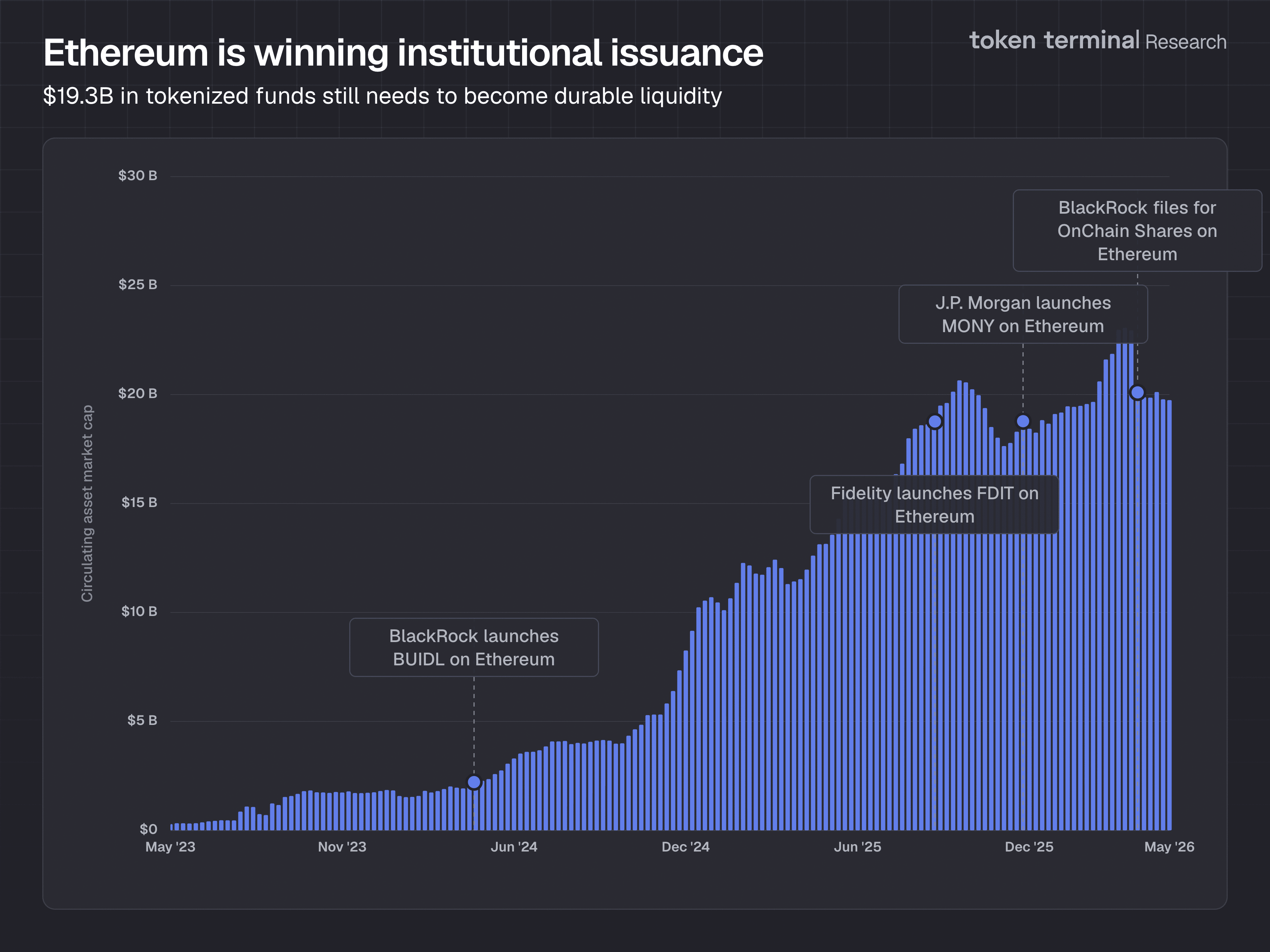
That’s all for now, folks.
PRO Readers: Read our alpha insights below!
– Marc & Team


