 By

Hi there, it's Marc.
Every stablecoin is backed by real dollars. Someone gets paid to look after them.
Invesco wants that job. Its new fund holds $10 million after two days, per 51 Intel. BlackRock's holds billions. Early days, to be polite.
Wall Street wants the fee, as I wrote on Tuesday. If you issue a stablecoin, ask each manager what it charges.
Here's what matters this week:
On the podcast
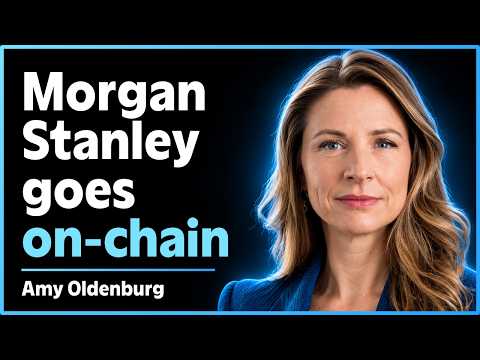
New this week: Amy Oldenburg, who runs digital asset strategy at Morgan Stanley. I asked her how long until an AI agent acts inside our bank account. Her answer: “We need to prepare for more volume”.
Also worth watching: Michael Howell of CrossBorder Capital on why the downcycle has started. Follow the show on Spotify.
01 / STABLECOINS
Wall Street wants the fee on top

What's going on here?
Invesco launched IROXX on Tuesday, a government money market fund built to hold stablecoin reserves under the GENIUS Act. Superstate keeps the fund's records on a blockchain, and BNY holds the assets. The minimum is $1 million. It's at least the eighth fund like this from a big US manager.

What does this mean?
As I wrote on Tuesday, here's how it works. You give Circle $1 and get 1 USDC. Circle parks your dollar in Treasury bills, which pay interest. Circle keeps it; the law bans paying you any.
A fund like IROXX does the parking. The issuer sends in dollars, the fund buys the bills and rolls them, and the issuer gets fund shares back as tokens anyone can check. The manager charges a fee for that.
BlackRock already runs this for Circle. Its fund holds $55.8 billion and charges 0.17% a year. That's about $95 million a year, for one client. Issuers keep the interest. Wall Street wants the fee on top.
Why should I care?
If you issue a stablecoin, or plan to, your reserve manager is now a bid: ask what each charges and whether investors can check the backing onchain every day.
The 51 Signal: one fund already has it
Eight big managers now sell a fund for stablecoin reserves. Almost all the money sits in one of them.

Assets of money market funds used for stablecoin reserves and onchain cash, November 18 to 19, 2026 (Fidelity October 31). Sources: 51 Intel; BlackRock; SEC Form N-MFP. Exhibit and analysis by 51 Insights.
Here's the tension. Everyone is launching, and nobody is switching. BlackRock's fund is 73 times the size of JPMorgan's, the next biggest we track. Fidelity's fund is open only to other Fidelity funds.
Our read: the newcomers aren't fighting for Circle. They're fighting for issuers that don't exist yet, like the 21 banks behind Project Faro. Goldman Sachs is a Faro owner and already has a reserve fund. Watch where Faro parks its first dollar.
PS: Get in front of 100k+ institutional readers.
We help you getting in front of institutional buyers, thanks to our 100k+ executive audience, including readers from J.P. Morgan, Goldman Sachs, Citi, UBS, Stripe, and others.

02 / BANKING · PRO ANALYSIS
DBS stops picking a side

What's going on here?
On Monday, DBS linked its tokenized deposits to JPMorgan's. On Tuesday, it signed with Circle: eligible institutional clients can now mint and redeem USDC through DBS, switching between dollars and USDC around the clock. On Thursday, Singapore's central bank said it issued S$100 million of bills on its own test network, settled in wholesale central bank money, with DBS, HSBC, OCBC, UOB and Standard Chartered.
What does this mean?
Three kinds of digital money, one bank, one week. DBS's head of digital assets, Evy Theunis, called the future "multi-modal and multi-instrumental." The same day, Fed Governor Waller said he sees "a range of payment solutions coexisting."
Our read: banks have stopped betting on one form of money. They want to be the switch between them. Circle needs that too. DBS joins Standard Chartered and BNY as banks that hand out USDC. Circle keeps the interest; the bank keeps the client.
51 Intel ranks DBS 7th of the 78 banks it scores on digital assets. Right now, three of the 23 global systemically important banks run digital money at scale: JPMorgan, Citi and now HSBC. —> Get access here

Why should I care?
If you bank with DBS, you can now get USDC through your bank instead of an exchange, so ask what it costs to switch between dollars, deposit tokens and USDC.
Related Pro story: US Banks are going on-chain
03 / TOKENIZATION
A UK bank token pays 5.2%. Stablecoins can't.

What's going on here?
Monument Bank, a UK digital bank with over £6 billion of deposits, went live on Tuesday with the UK's first tokenized retail deposits on a public blockchain. Up to £250 million of savings is mirrored one for one as MGBP tokens on Midnight, a privacy-focused chain. Customers get 5.2% fixed for 12 months, through the bank's app, with the UK deposit guarantee intact. Balance, a Canadian custodian, minted the tokens and holds them.
What does this mean?
A tokenized deposit is still a bank deposit, so it can pay interest. A US stablecoin can't, by law. That's the trade from our first story, seen from the other side: the bank pays the saver, the stablecoin issuer keeps the yield.
Be smart: For now this is a 12-month fixed-rate account, so the money stays put. Midnight calls it phase one.
Our read: the first retail reason to tokenize isn't speed. It's yield with a government guarantee behind it.
Why should I care?
If you run a UK bank, a challenger just put savings onchain without losing the deposit guarantee, so expect your board to ask why you're still piloting.
04 / TOKENIZED STOCKS · PRO ANALYSIS
Anthropic got a token. Anthropic wasn't asked.

What's going on here?
Anthropic started trading on Nasdaq on Thursday and closed up 17%, valued at $1.27 trillion. Within minutes, Ondo launched ANTon, a token that tracks Anthropic's shares, backed by the shares, for investors outside the US. It mints and redeems 24/7. Ondo says Anthropic doesn't sponsor or endorse it.
What does this mean?
Last week I wrote that the fight isn't over the token. It's over who keeps the list of owners. An ANTon holder has a claim on Ondo's British Virgin Islands company, not a share on Anthropic's register. Compare DTCC's tokens, which are the security itself.
The market is building the missing piece. Coinbase and Broadridge proposed a standard on Monday for sending shareholder notices to wallets that hold tokenized shares. OKXICE opens on Monday with the companies that said yes.
Why should I care?
If you run a public company, anyone can tokenize your stock without asking, so know which tokens carry your shareholders' rights and which only track your price.
Quick Hits
Standard Chartered goes faster. Its tokenized deposits now move near real time between Singapore and Hong Kong, in six currencies.
The CFTC approves tZERO. tZERO won approval, alongside Backpack, to run a derivatives exchange and clearinghouse on a blockchain.
Visa Direct takes stablecoins. Clients in Asia-Pacific can now prefund payouts in stablecoins through Triple-A; recipients get local currency.
Bitcoin as margin. Anchorage clients can pledge bitcoin and stablecoins held at its bank as margin on Kalshi Prime.
Weekend Treasury financing. Talos, Marex and Broadridge plan to finance DTCC-tokenized Treasuries outside market hours.
Allfunds picks Centrifuge. Five Centrifuge-powered funds won a place on Allfunds' $2 trillion+ network, targeting Q1 2027.
Three central banks net FX. The Bank of England, MAS and Bank of Thailand completed a test linking their settlement systems for cross-currency payments.
MEXC gets cut off. FinCEN bars US institutions from moving funds for MEXC Global from December 10.
Money Moves
Variational, $110 million Series B. The onchain derivatives platform raised at a $1.5 billion valuation.
Kraken's parent buys Tribe Capital. Payward agreed to acquire the venture firm to add private-market investing.
Tether's shopping week. Tether Capital put $15 million into Nomad in Brazil and backed MetaComp, Stables and SCRYPT.
Boardroom Reads
The Alpine crypto 'wonderland' forging close ties with Tether. Nikou Asgari, Financial Times. How Lugano bet its economy on a joint venture with the issuer of a $176 billion stablecoin.
Crypto's blue wave reckoning. Jasper Goodman, Politico. Crypto's super PAC spent over $150 million backing Republicans, and Democrats now run Congress.
A Lot of People Want Anthropic Stock. Matt Levine, Bloomberg Opinion. Levine on Anthropic, and why so many people want a piece of its stock.
Considerations at the Intersection of Payments and Tokenized Markets. Christopher Waller, Federal Reserve. A Fed governor on how tokenized markets should connect to today's payment rails.
Financial stability in a rapidly changing world. Andrew Bailey, Financial Stability Board. Why stablecoins could become a stability risk before they look big.
On the Calendar
November 23: OKXICE starts trading tokenized US securities. Comments close on the OCC's GENIUS Act application form.
November 30: Comments close on the Fed's GENIUS Act proposal.
December 1: The FT Global Banking Summit opens in London.
December 7: Abu Dhabi Finance Week opens.
December 9: The Fed announces its rate decision.
December 10: FinCEN's MEXC order takes effect.
Last week's poll

51 Intel: the data behind this newsletter
The 51 Intel data in this issue, from reserve funds to bank rankings, comes from the same platform our members use. It’s an AI-first intelligence platform that tracks the companies, funds and deals shaping digital assets, with Ask51, an AI analyst.
That's all for now, folks.
– Marc & Team

Did you like this newsletter? |


